Longview Networks loading now
Skip to Main Content
  • 155 Bishopsgate
    London
    EC2M 3YD

Room151’s LATIF 2026

Register for this conference

Register here

Enter your password to gain access to the delegate list and presentations (your password is sent out 5 days before the event)

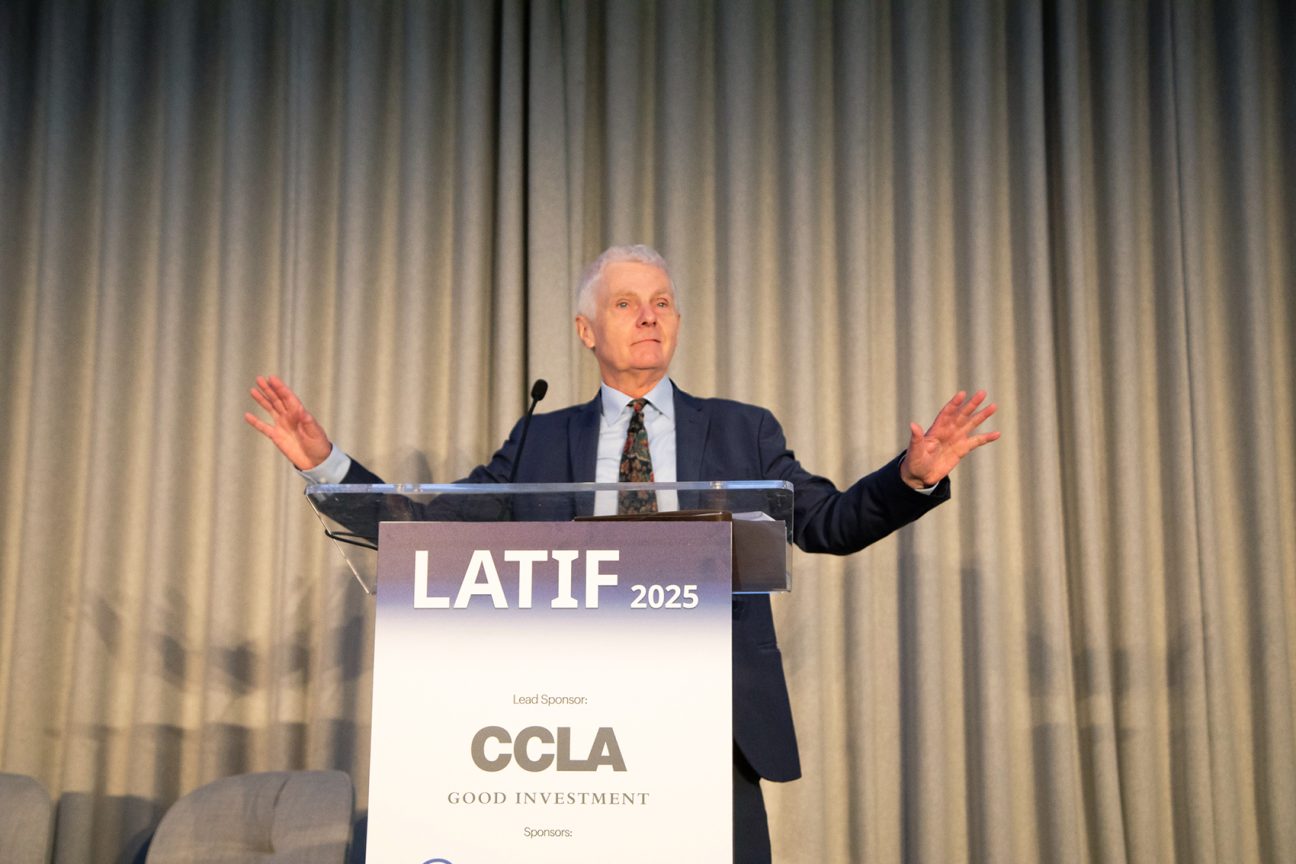
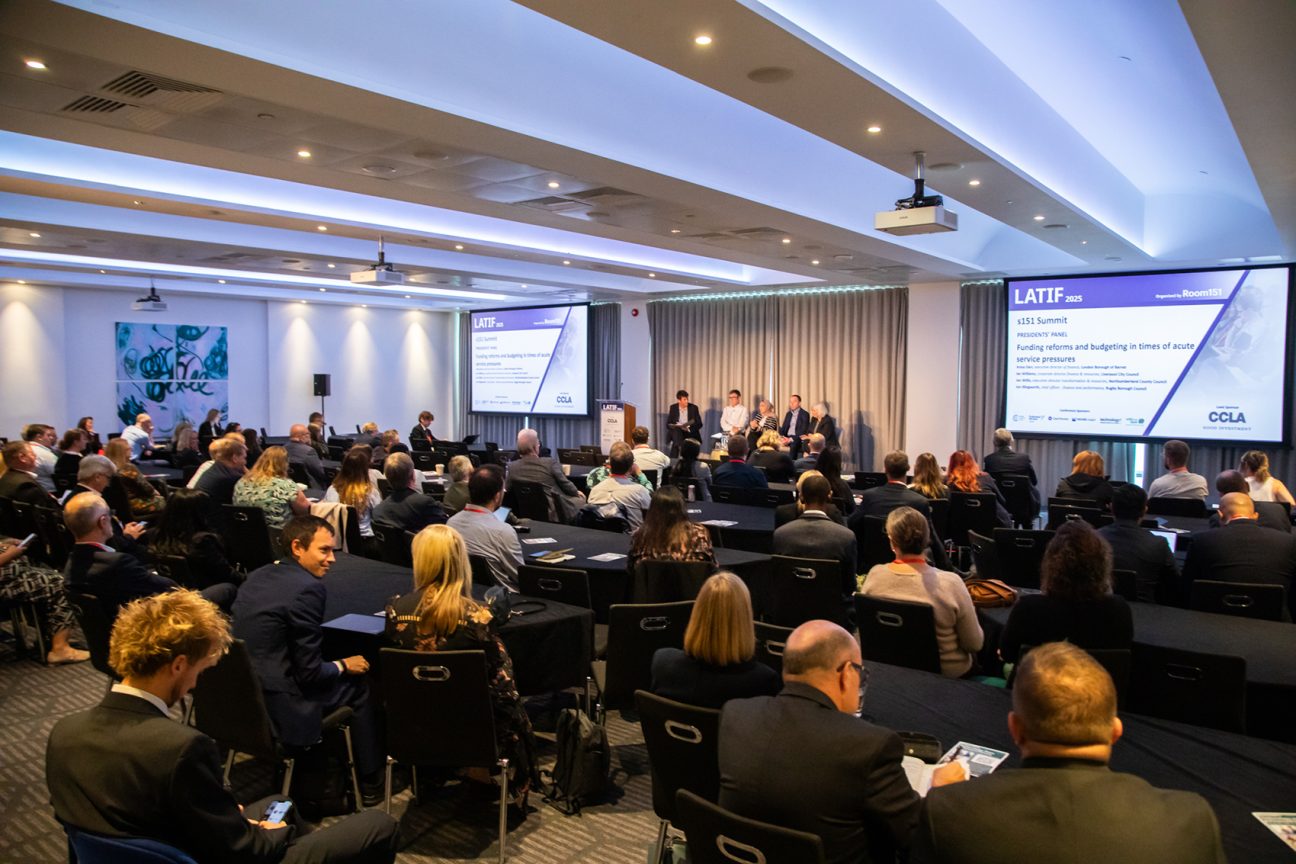
Over the past 18 years, LATIF has become the must-attend annual gathering of local government treasury and investment managers, finance directors and s151 officers.

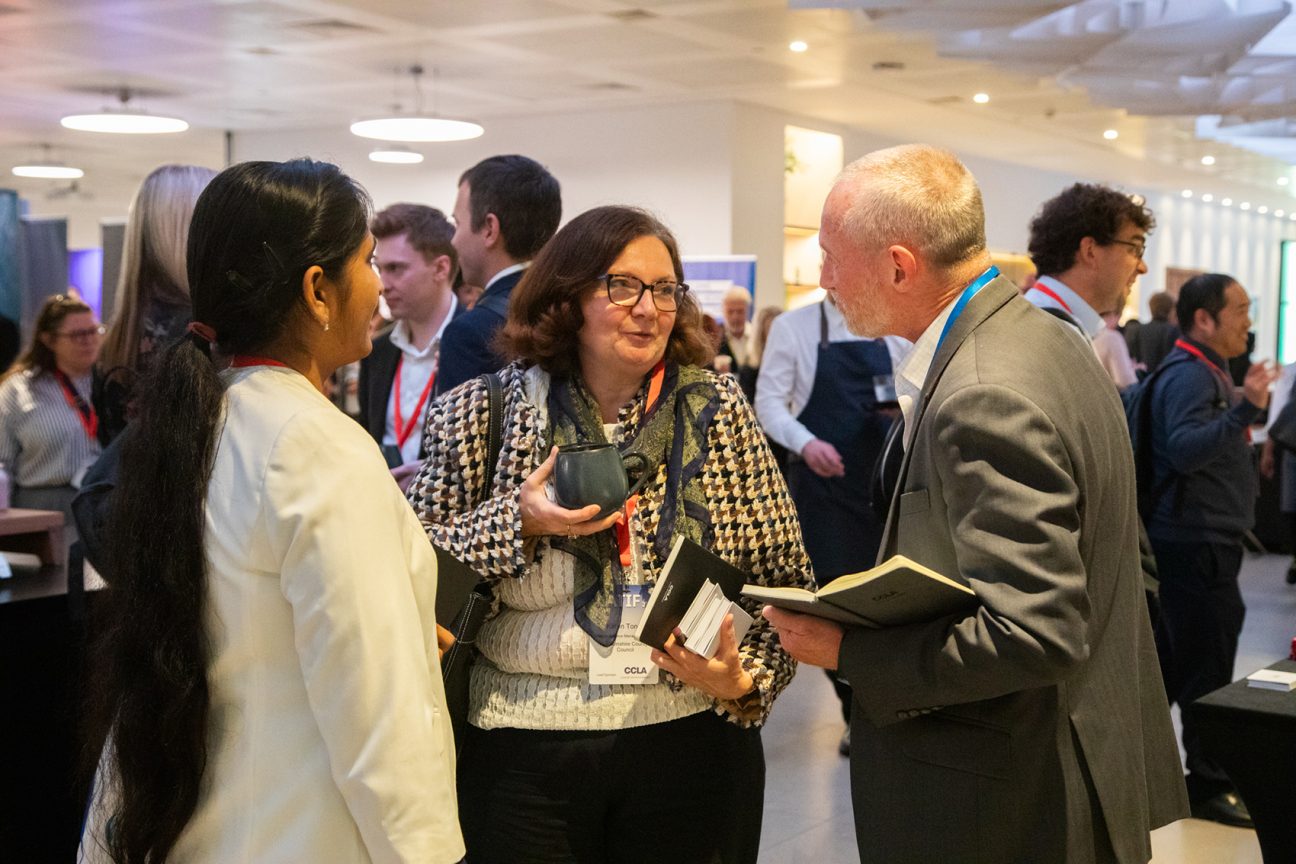
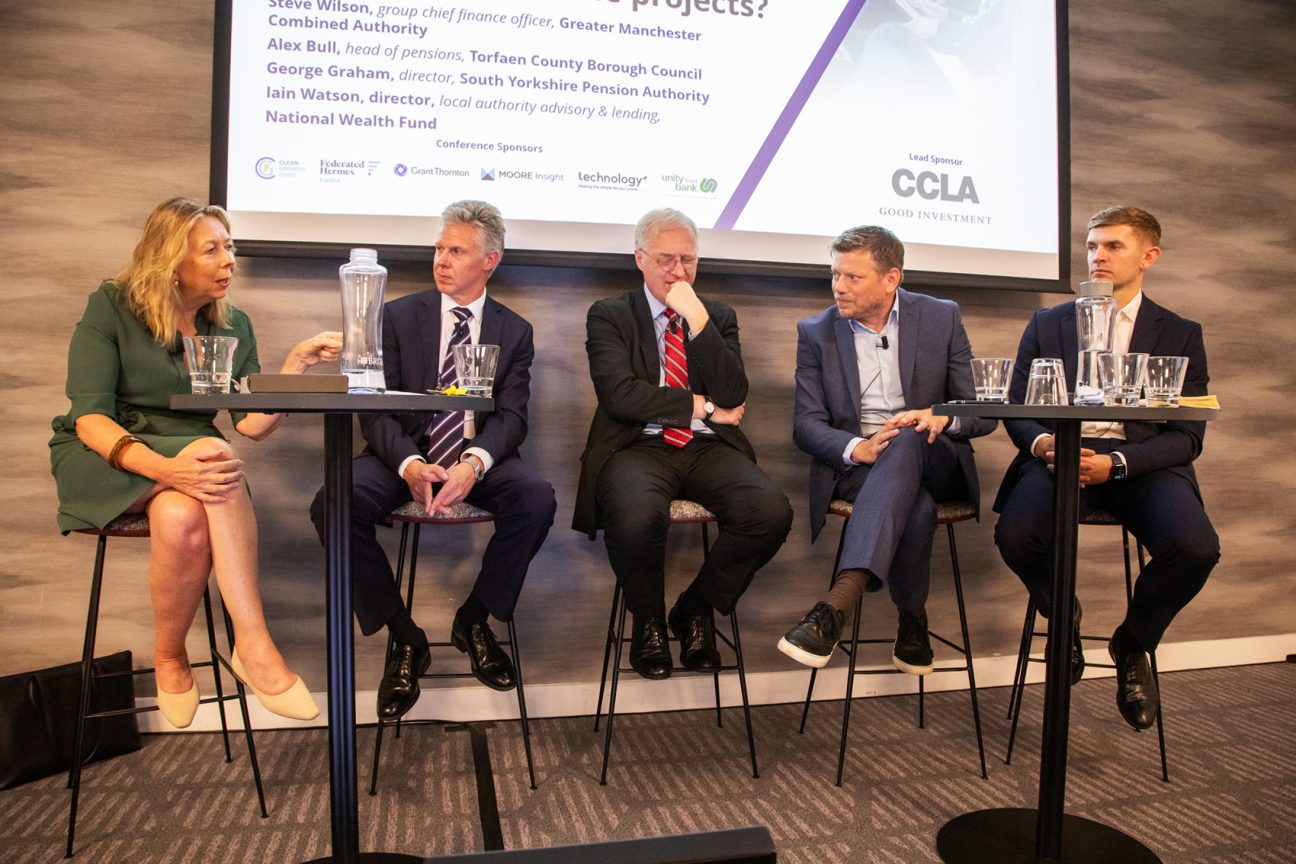
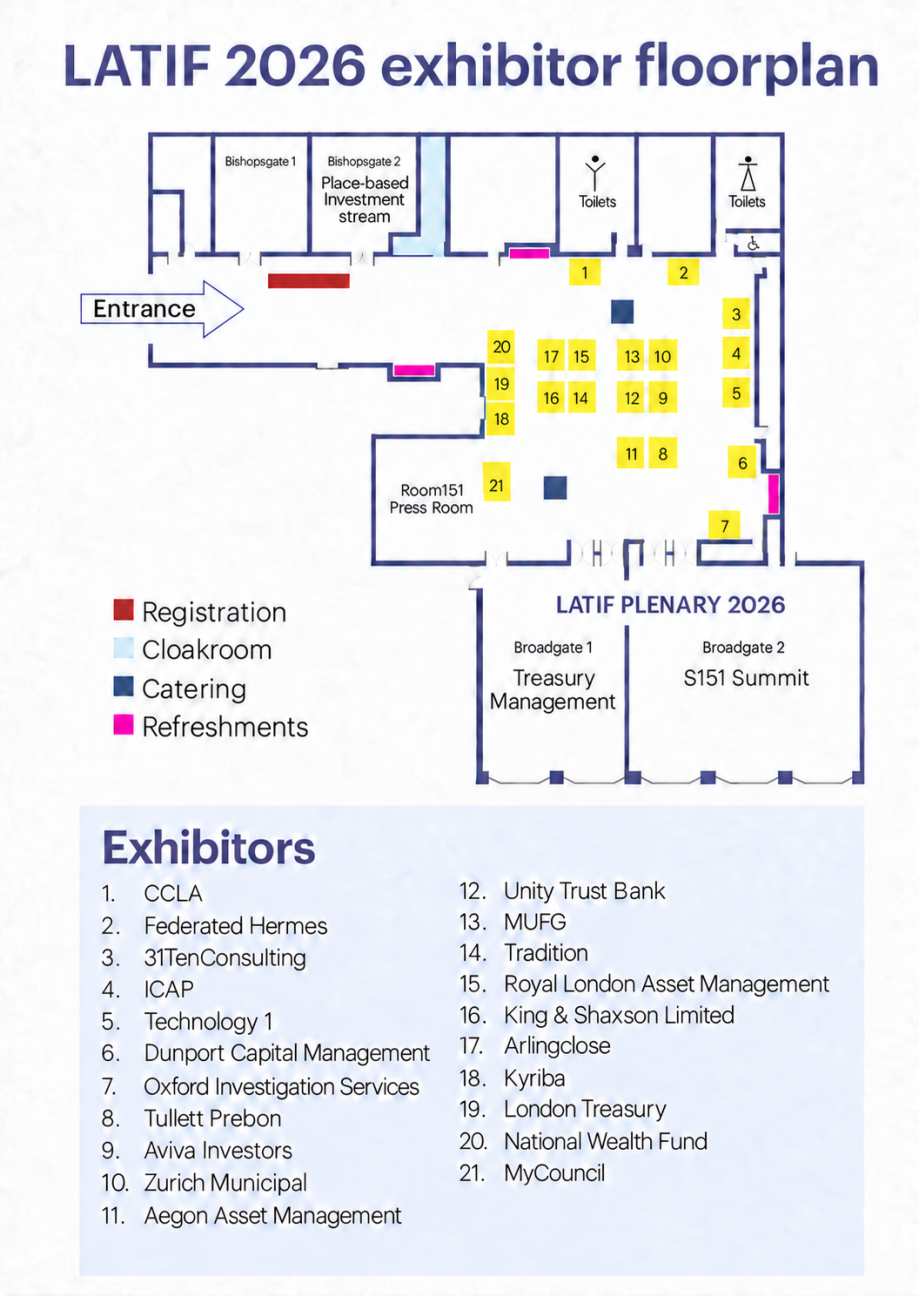
Attracting over 250 delegates with representatives from over 100 local authorities, and including an exhibition with 20+ key financial services providers to the sector, Room151’s annual conference offers unparalleled opportunities to network over lunch, coffee and at the ever-popular drinks reception.

The conference has a £120+VAT fee for local government officers, that covers the entire day, all refreshments, access to the drinks reception and will also contribute towards special guest speaker fees. However, attendance is free to all Room151 subscribers

Three streams in one day
LATIF’s opening plenary sessions feature keynote addresses from the biggest names in local government finance as well as leaders from the investment management world. In previous years we have welcomed local government minister Lee Rowley, Dame Meg Hillier, MP, Tony Travers, Stephanie Flanders, Karen Ward, and Sir Tony Redmond. In 2026 you can expect some very special guest speakers alongside a host of leading lights from local, regional and central government. After the plenary session delegates can choose between three streams:

  • Treasury management
    LATIF has its roots in treasury borrowing and investment and the event’s biggest stream examines economic and market risks as well as opportunities for treasury managers across their councils’ investments and loan books.
  • S151s’ Summit
    The s151s’ Summit explores strategic finance and funding challenges with a mix of case-studies, panel sessions and presentations from leading industry figures. With a seminal period of transformation on the horizon the finance of change, and changes to finance will be central to this year’s agenda. The summit regularly hosts a panel of presidents from the local government treasury societies.
  • Place-based investment
    With significant change to both the structure of local government and to the Local Government Pension Scheme being driven by central government, the landscape for regional collaboration, pension fund investment in local projects, and innovative treasury management is changing before our eyes. At this year’s event we’ll bring together key players to explore the art of the possible.

Who should attend?

  • Section 151 officers
  • Deputy section 151 officers
  • Commercial directors
  • Finance directors
  • Chief finance officers
  • Heads of finance
  • Heads of treasury and pensions
  • Treasury managers/officers
  • Chief/principal accountants
  • Section 73 officers
  • Director for investment
  • Directors of economy and investment
  • Director of place
  • LGPS officers
  • LGPS pools

Excellent event and great networking opportunity. Highly recommend it.

Corporate Director of Finance and Resources, Liverpool City Council
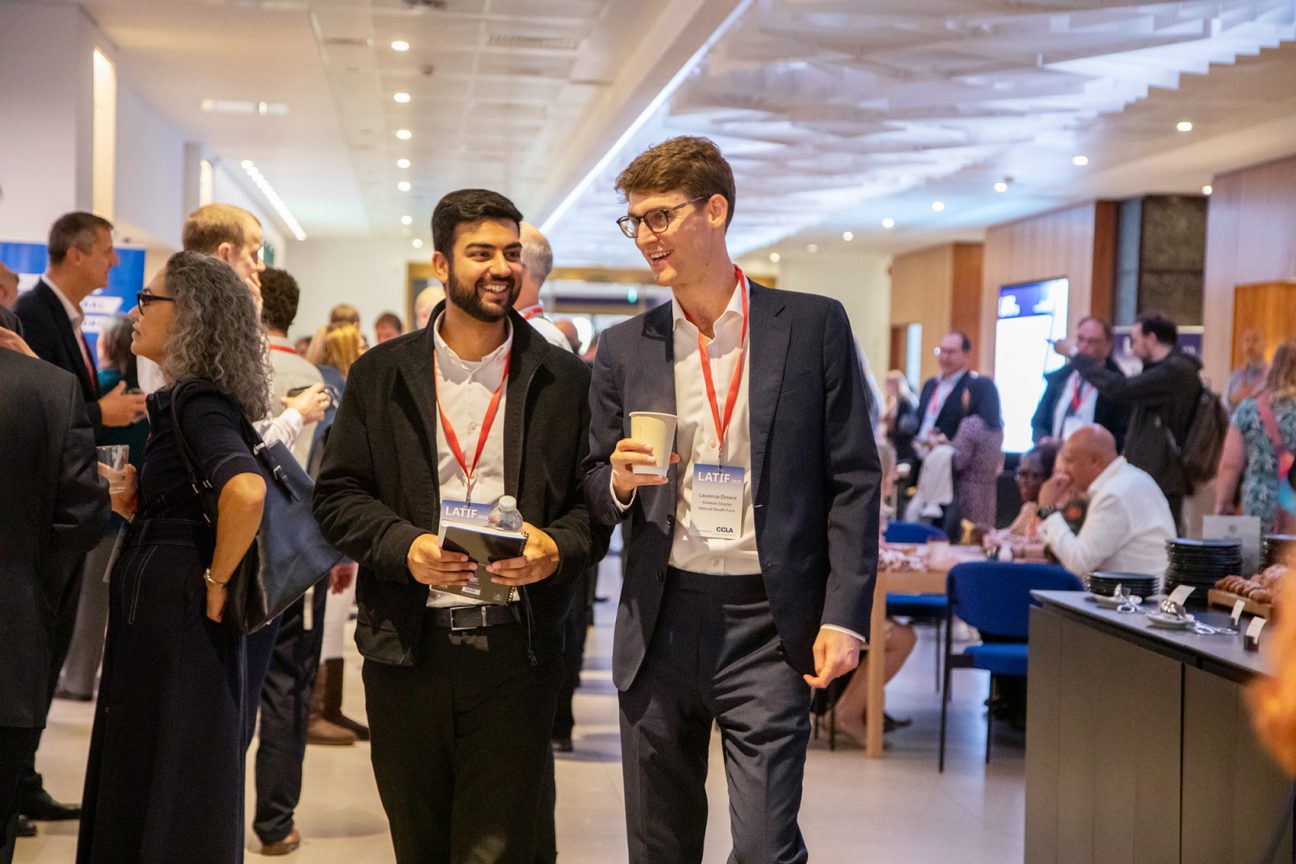
Great venue, interesting presentations, really busy with the right level of attendees.

Client Relationships & Sales Manager, Federated Hermes

For information on sponsorship and exhibition opportunities contact george.howard-smith@longviewnetworks.com
9:00

Registration

9:30

Plenary session - chair's opening remarks

Speakers
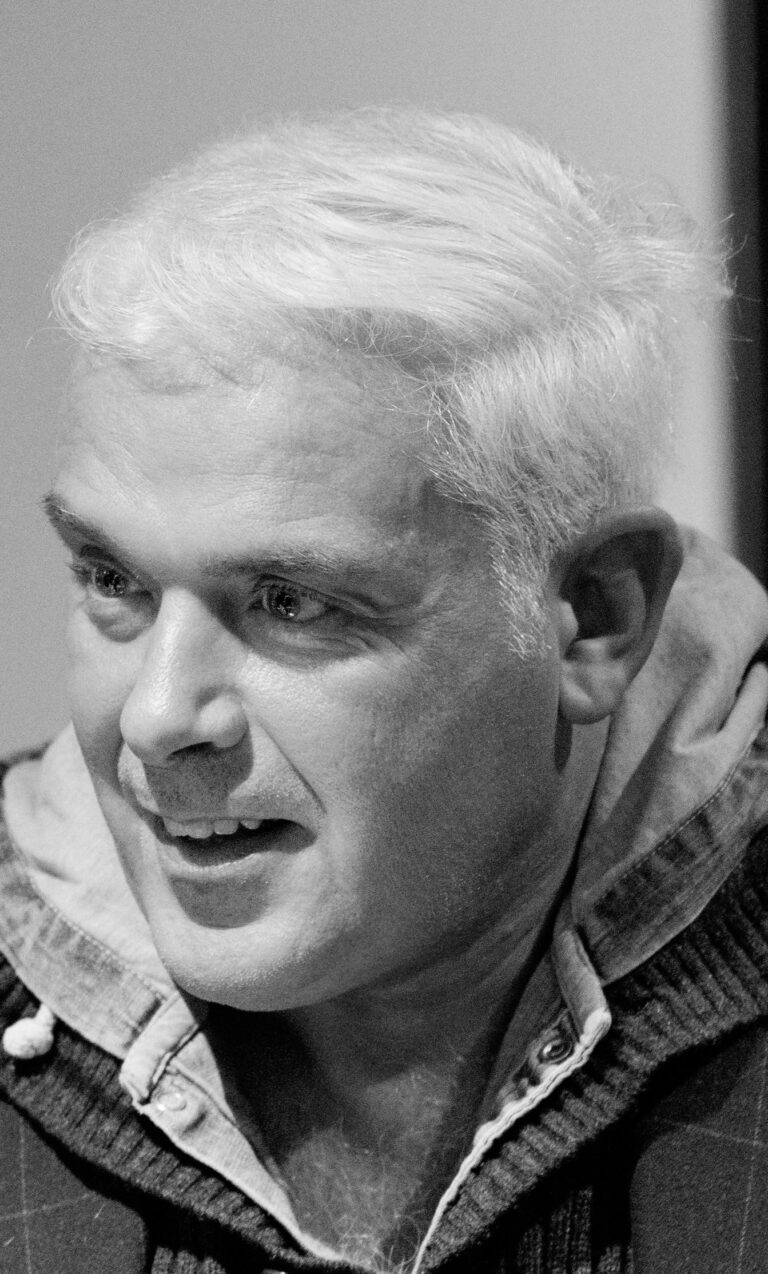
Tony Travers

director

London School of Economics

9:40

MINISTERIAL/KEYNOTE ADDRESS

10:00

KEYNOTE PANEL: The devolution revolution & “Manchesterism”– what do they mean for the future of local government?

With increased devolution central to the Government’s ambitions for regional growth & prosperity how will these plans reshape local government?

With much talk of “Manchesterism”– what does it mean and can it be replicated across the UK?

Will greater regional autonomy deliver on its promises or is there a risk that, amid funding gaps and differing regional priorities, devolution could fall short?

How can fiscal measures such as business rates retention, overnight visitor levy and fiscal devolution be used to support local democracy?

How can regional mayors combined authorities and councils work with central government and private sector partners to drive meaningful and lasting change?

Panel will include influential figures from local government and be moderated by a well-known broadcaster.

Speakers
Robin Tuddenham

Chief Executive

Calderdale Council

Susan Halliwell

chief executive officer

Bracknell Forest Council

Amy Harhoff

chief executive

East Midlands Combined County Authority

10:50

SURVEY RESULTS: CCLA/Room151 Annual Investment & Current Affairs Survey 2026

Key results from our survey of local government finance officers giving a snapshot of investments, borrowing and budget pressures.

Speakers
Richard Sankey

client investment director

CCLA

11:10

Networking break

11:40

Treasury stream opening remarks
Speakers
Tim Seagrave

commercial finance lead

Manchester City Council

11:40

MACROECONOMIC PANEL:  Oil shocks, geopolitics, and the future path of interest rates

How is conflict in the Middle East and Ukraine disrupting energy markets, elevating costs, and impacting inflation in the longer term?

How is the Bank of England likely to manage the trade-offs between persistent inflation, slowing growth, and financial stability when making interest rate decisions in the coming months?

How is economic uncertainty affecting Gilt and bond yields?

Are we likely to see a UK downturn and what does this mean for the economic outlook?

Speakers
Sidhant Mehta

investment strategist

CCLA

12:20

INVESTMENT PANEL: Making the most of MMFs and innovation in investment - how do we maximise scarce resources?

With council finances remaining under considerable pressure, treasury teams are facing a juggling act to make the most of limited funds.

What are the innovative investment models that treasurers are finding to relieve pressure on areas such as housing whilst also creating returns?

With MMFs still being the main vehicle for liquid investments how do you ensure you gain the most efficiencies within them? Are there any alternatives? How do you evaluate their return?

How much is your treasury investment is linked to the MTFP and how is treasury viewed by decision makers in your organisation?

Speakers
Nemashe Sivayogan

head of treasury and pensions

London Borough of Merton

Mark Finnegan

lead treasury accountant

West Midlands Combined Authority

Gary Skedge

head of UK liquidity strategies

Federated Hermes

12:55

SPONSOR SESSION

1:10

Lunch

2:10

Chair

Speakers
James Graham

director of investments & treasury

City of London Corporation

2:10

SPONSOR SESSION

2:25

From LGR to political transition - how do we manage change?

With many councils likely to see new political directions & LGR decisions in the coming months what does this mean for treasury and investment?

How are councils that are going through LGR managing day to day treasury functions whilst working towards unitarization?

What impact can political change have on longer-term plans and what is the role of treasury in educating new elected members? How do you incorporate political manifesto pledges into your TMS?

Speakers
Tim Chapple

strategic financing & investment manager

Oxfordshire County Council

Biyi Adegbola

senior finance business partner 

West Northamptonshire Council

David Blake

chief operating officer

Arlingclose Limited

Joshua Meek

chief impact officer

Unity Trust Bank

3:05

How are we dealing with capital financing & borrowing pressures?

With war in the Middle East having a huge impact on interest rates assumptions made in budgets, how are capital programmes being revised in light of this?

What impact is slippage having on the ability to borrow effectively?

How do capital, treasury and s151s work together to effectively manage borrowing?

How are we linking the affordability of capital programs to the MTFS in line with new CIPFA code guidance?

What alternatives to PWLB are being sought  – is SONIA linked revolving credit with commercial banks a viable alternative?

Is the HRA rate on PWLB creating barriers to house building?

Speakers
Patrick Rowe

strategic finance manager - treasury & pensions

Westminster City Council

Biyi Adegbola

senior finance business partner 

West Northamptonshire Council

Tim Seagrave

commercial finance lead

Manchester City Council

Innes Edwards

principal treasury and banking manager

City of Edinburgh Council

3:45

Networking break

4:15

Chair

Speakers
Oliver Simms

head of finance (capital, treasury and commercial)

London Borough of Brent

4:15

TECHNICAL & ACCOUNTING PANEL - Accounting challenges & prudential & treasury code updates

With local authority accounts becoming more complex, taking longer to prepare and still not being effectively audited, what is the true function of the accounts & how are they used for effective decision making?

With issues still exiting with audit can the accounts still be relied upon?

What are the latest updates to the prudential and treasury codes?

Speakers
Christine Golding

chief accountant,

Essex County Council

Martin Wheatcroft

external advisor on public finances to

ICAEW

4:55

How do you build skills, capacity and resilience in treasury teams?

Whether you are an authority going through LGR or not the treasury landscape remains challenging, how do we ensure that teams have the skills they need to thrive?

How do we deal with skills shortages in treasury teams and develop the treasurers of the future?

What role could more shared services & collaboration play in managing scarce human resources and creating efficiencies of scale?

How is AI and technology being used to free up time and create efficiencies?

What impact is LGR having on treasury teams?

Speakers
Mike Docherty

finance business partnering manager

East Renfrewshire Council

Innes Edwards

principal treasury and banking manager

City of Edinburgh Council

Katherine Gray

head of pensions investments and treasury, shared finance service

London Borough of Sutton & Royal Borough of Kingston upon Thames

5:30

Closing remarks and end of conference

5:30

Networking drinks reception in conference venue

6:00

Post conference drinks

Join us for further drinks and networking at a nearby City of London pub – venue tba.

9:00
Registration
9:30
Plenary session - chair's opening remarks
Tony Travers

director

London School of Economics

9:40
MINISTERIAL/KEYNOTE ADDRESS
10:00
KEYNOTE PANEL: The devolution revolution & “Manchesterism”– what do they mean for the future of local government?

With increased devolution central to the Government’s ambitions for regional growth & prosperity how will these plans reshape local government?

With much talk of “Manchesterism”– what does it mean and can it be replicated across the UK?

Will greater regional autonomy deliver on its promises or is there a risk that, amid funding gaps and differing regional priorities, devolution could fall short?

How can fiscal measures such as business rates retention, overnight visitor levy and fiscal devolution be used to support local democracy?

How can regional mayors combined authorities and councils work with central government and private sector partners to drive meaningful and lasting change?

Panel will include influential figures from local government and be moderated by a well-known broadcaster.

Robin Tuddenham

Chief Executive

Calderdale Council

Susan Halliwell

chief executive officer

Bracknell Forest Council

Amy Harhoff

chief executive

East Midlands Combined County Authority

10:50
SURVEY RESULTS: CCLA/Room151 Annual Investment & Current Affairs Survey 2026

 Key results from our survey of local government finance officers giving a snapshot of investments, borrowing and budget pressures.

Richard Sankey

client investment director

CCLA

11:10
Networking break
11:40
s151 stream opening remarks
Anisa Darr

executive director of strategy and resources and S151 officer

London Borough of Barnet

11:40
THE PRESIDENTS' PANEL: Have some recent policy reforms produced unintended financial pressures for local authorities?

Our panel of treasury society presidents explore the issues that are currently causing them most concern.

While SEND grant funding has offered short-term relief, what long-term impact will the White Paper have, and how will the sector address immediate funding gaps before the DSG deficit relief arrives in the autumn?

Are cuts to NHS ICBs creating a ticking time bomb for service demand in local government?

Given ongoing funding pressures in schools, how are Section 151 officers dealing with deficits in maintained schools?

Are recent waste and recycling changes causing issues?

Phil Rook

chief financial officer, commercial, risk, pensions and transformation

Worcestershire County Council

David Stanley

Deputy Chief Executive and Section 151 Officer

Cotswold District Council

Ian Williams

corporate director of finance & resources (section 151)

Liverpool City Council

Peter Turner

director of finance

London Borough of Bromley

12:20
INTERACTIVE SESSION: How do we solve the recruitment crisis in local government finance?

With many councils suffering from staff shortages in finance teams, from s151s down to technical accountants, are we suffering from a recruitment crisis?

How do we attract school leavers through accredited training pathways and apprenticeships?

How do we retain staff when the talent pool is small and more lucrative opportunities exits elsewhere?

With LGR seeing many s151s taking retirement how do we deal with experienced leaders leaving the sector?

Adele Taylor

interim director of finance and operations (S151)

Cheltenham Borough Council

Oliver Simms

head of finance (capital, treasury and commercial)

London Borough of Brent

Richard Harbord

Strategic director, resources (S151)

London Borough of Barking & Dagenham

12:50
SPONSOR KEYNOTE
1:10
Lunch
2:10
Insights from local government financial documents: trends, risks and opportunities
Dan Bates

head of research

Room151

2:25
AI and digital innovation – identifying opportunities and managing risk

With so much hype around AI and the impact that digital innovation can have on efficiency savings and public service delivery- what is the real story?

What are the ethical issues around the use of technology to handle data?

Are AI-generated complaints and legal challenges adversely affecting officer time, or are they enabling greater public interaction with councils?

What are the real examples of technological innovation in local government?

Emma Foy

local government lead

TechnologyOne

Conrad Hall

Corporate Director of Resources and s151 Officer

Croydon Council

Paul Simpson

interim executive director of corporate resources

East Riding of Yorkshire Council

3:05
What’s next for LGR?

As the government has announced decisions on what LGR will look like in areas such as Essex, Suffolk, Norfolk and Hampshire we look ahead as to what is next for these authorities.

How do we ensure the financial suitability of the new authorities?

How do councils continue to deliver business as usual whilst going through huge staff changes and transitions?

What will be the next steps for LGR  – will other areas such as London be included in the future?

Lorna Baxter

deputy chief executive (section 151 officer)

Oxfordshire County Council

Michael Hudson

executive director finance & resources

Cambridgeshire County Council

Alison Betts (Scott)

director of finance

Three Rivers District Council

3:45
Networking break
Chair
Suzanne Jones

former s151 officer & consultant

4:15
Innovative approaches to alleviating service pressures & delivering efficiencies

As demand continues to rise and resources remain constrained, local authorities are under increasing pressure to maintain high-quality services while delivering financial sustainability.

How are councils responding to these challenges through innovation, collaboration and new ways of working?

What are the practical examples of initiatives that are helping to deliver efficiencies and savings in key pressure points such as temporary accommodation, social care and SEND delivery?

How are we balancing innovation and efficiency with effective governance and risk management?

Clive Heaphy

interim chief financial officer (s151 officer)

Somerset Council

Jon Ritchie

executive director of transformation & resources

Northumberland County Council

Stephen Fitzgerald

Strategic Director for Finance and Resources (s151)

Woking Borough Council

5:00
The role of the CFO in an ever-changing world

The role of the s151 officer is more challenging than ever, how do we handle these changes and successfully?

How do we manage decision making with more councils likely to be under no overall control?

How do we evaluate and account for economic risk and instability in our budgets?

How do we manage the people element of change management on a personal and organisational level?

Carol Culley

executive director of finance

Birmingham City Council

5:30
Closing remarks and end of conference
5:30
Networking drinks reception in conference venue
6:00
Post conference drinks

Join us for further drinks and networking at a nearby City of London pub – venue tba.

9:00

Registration

9:30

Plenary session - chair's opening remarks

Speakers
Tony Travers

director

London School of Economics

9:40

MINISTERIAL/KEYNOTE ADDRESS

10:00

KEYNOTE PANEL: The devolution revolution – what does it mean for the future of local government?

With increased devolution central to the Government’s ambitions for regional growth & prosperity how will these plans reshape local government?

With much talk of “Manchesterism”– what does it mean and can it be replicated across the UK?

Will greater regional autonomy deliver on its promises or is there a risk that, amid funding gaps and differing regional priorities, devolution could fall short?

How can fiscal measures such as business rates retention, overnight visitor levy and fiscal devolution be used to support local democracy?

How can regional mayors combined authorities and councils work with central government and private sector partners to drive meaningful and lasting change?

Panel will include influential figures from local government and be moderated by a well-known broadcaster.

Speakers
Robin Tuddenham

Chief Executive

Calderdale Council

Susan Halliwell

chief executive officer

Bracknell Forest Council

Amy Harhoff

chief executive

East Midlands Combined County Authority

10:50

SURVEY RESULTS: CCLA/Room151 Annual Investment & Current Affairs Survey 2026

Key results from our survey of local government finance officers giving a snapshot of investments, borrowing and budget pressures.

Speakers
Richard Sankey

client investment director

CCLA

11:10

Networking break

11:40

Place based investment stream opening remarks

Speakers
Gemma Bourne

managing director, property

Better Society Capital

11:40

The future of place-based capital – what does "local" look like following recent reforms?

The post-Pension Schemes Act landscape – what do the reforms mean for LGPS and other investors investment in local economies?

Devolution in action – how will partnerships between LGPS pools, combined authorities and local authorities deliver place-based investment?

The Manchesterism model – what are the governance frameworks, fiscal devolution and institutional structures required to unlock place-based investment across the UK?

Ensuring inclusive growth – how can the benefits of local investment reach rural and underserved communities, not just mayoral city regions?

Speakers
Andrew Stone

assistant director - investment strategy

South Yorkshire Pensions Authority

Laura Blakey

director of strategic finance & investment

Greater Manchester Combined Authority

Ed Rowberry

chief executive

BBRC and on secondment to Office for the Impact Economy (OfIE)

12:20

Balancing returns with social impact – how do we create returns, manage risk & measure performance?

With more local investment likely to be mandated by government how are investors balancing this with their fiduciary duties?

How do mayoral authorities ensure that they are making attractive, investable propositions to investors?

How do investors assess the risk profile of local projects?

How do you measure social return?

Speakers
Tanmay Desai

head of built environment

Pension Insurance Corporation

Shiv Sivanesan

director of investment management and stewardship

West Midlands Pension Fund

Richard Williams

executive director of resources

East Midlands Combined County Authority

12:50

SPONSOR KEYNOTE

1:10

Lunch

2:10

Chair's opening remarks

Speakers
George Graham

independent adviser

Border to Coast Pensions Partnership

2:10

SPONSOR SESSION

2:25

Housing and regeneration – what are the investment models already transforming local prospects?

With housing and regeneration a key area of priority for the government and investors seeing promising long-term returns, how are these asset classes fitting into portfolios?

What are the innovative financing models needed to see real progress in housing development and delivery?

How are investors assessing viability and managing risk?

What role will Homes England, the National Housing Bank and the Brownfield Investment Fund play in unlocking investment?

Speakers
David Allen

strategic head of property

Royal Borough of Kensington and Chelsea

Justin Olosunde

head of strategic investments & planning

West of England Combined Authority

3:05

How are private credit and private equity revolutionising investment in SMEs, infrastructure and housing?

What role can private credit and private equity play in providing flexible capital to local businesses and community infrastructure projects?

How can key stakeholders work together to increase origination opportunities? What do these processes look like, and how can current viability gaps be addressed to facilitate investment?

Are there enough opportunities that do not require investors to “sacrifice” returns”? How are investors evaluating risk and returns?

What are the most compelling examples of private credit and private equity delivering impact through place-based investment?

What is the difference between place-based investing and place-based impact investing?

Speakers
Ross Morrow

executive director

DunPort Capital

Wyndham North

Managing Director Capital Formation

British Business Bank

3:45

Networking break

4:15

Unlocking local infrastructure – how is investment in key local projects providing a foundation for local prosperity?

How can targeted investment in transport, digital infrastructure and energy improve connectivity, productivity, and quality of life in local communities?

What are the successful local and regional projects already delivering impact and returns –  what made them effective and scalable?

What collaboration between public bodies, private investors, and communities is needed to deliver sustainable, long-term local prosperity?

Speakers
Iain Watson

director of lending

National Wealth Fund

4:45

Net zero, renewable energy and natural capital – how are these projects stacking up for investors?

With a crisis in the Middle East emphasizing the need for increased energy security, what role can investors play in developing renewable energy infrastructure?

How are investment models, including project finance, private markets, and blended finance structures, alongside the role of policy, regulation, and public-private collaboration in enabling investable pipelines?

How are these asset classes are performing in practice and what is driving investor appetite across risk, return, and impact considerations?

What role can natural capital play in creating investment in rural areas?

Speakers
Kenroy Quellennec-Reid

Deputy Director – Impact Investment

London Treasury Limited

Will Wollerton

senior sustainability manager

Standard Life

Mike Wedderspoon

director, strategic engagement and delivery

Scottish National Investment Bank

5:30

Closing remarks and end of conference

5:30

Networking drinks reception in conference venue

6:00

Post conference drinks

Join us for further drinks and networking at a nearby City of London pub – venue tba.

With thanks to our advisory boards…


S151 STREAM

Dan Bates, head of research, Room151

Lorna Baxter, executive director of resources, Oxfordshire County Council

Alison Betts, director of finance, Three Rivers District Council

Carol Culley, executive director of finance and S151 officer, Birmingham City Council

Anisa Darr, executive director of finance, London Borough of Barnet

Janice Gotts, executive director of resources and s73 officer, Cambridgeshire and Peterborough Combined Authority

Philip Gregory, director of finance & commercial services (s151 officer), Sheffield City Council

Conrad Hall, corporate director of resources and s151 officer, London Borough of Croydon

Richard Harbord, s151, London Borough of Barking and Dagenham

Michael Hudson, executive director finance and resources, Cambridgeshire County Council

Adele Taylor. interim director of resources (s151 officer), Cheltenham Borough Council

Tom Wilkinson, city treasurer and interim deputy chief executive, Manchester City Council


TREASURY STREAM

Biyi Adegbola, senior finance business partner, West Northamptonshire Council

Johirul Alam, treasury manager, Birmingham City Council 

Tim Chapple, strategic financing & investment manager, Oxfordshire County Council

Michael Docherty, finance business partnering manager, East Renfrewshire Council

Innes Edwards, principal treasury and banking manager, City of Edinburgh Council

Mark Finnegan, lead treasury accountant, West Midlands Combined Authority

James Graham, senior associate treasury solutions, London Treasury Limited

Lindsey Keech, head of finance – capital and treasury, Greater Manchester Combined Authority

Patrick Rowe, strategic finance manager – treasury & pensions, Westminster City Council

Oliver Simms, head of finance (capital, treasury and commercial), London Borough of Brent

Tim Seagrave, commercial finance lead, Manchester City Council

Nemashe Sivayogan, head of treasury and pensions, London Borough of Merton


PLACE BASED INVESTMENT STREAM

David Allen, strategic head of property, Royal Borough of Kensington and Chelsea

Gemma Bourne, managing director, property, Better Society Capital

Paddy Dowdall, investment director for local investment (incoming), LGPS Central

Alex Jones, investment manager, Greater Manchester Pension Fund

Philip Latham, head of Clwyd pension fund, Clwyd Pension Fund

Sam Monger, head of place-based impact investing (PBII) and strategic advisory, The Good Economy

Justin Olosunde, senior funding and investment manager, West of England Combined Authority

Richard Williams, CFO, East Midlands Combined Authority

Will Wollerton, senior sustainability manager, Standard Life

Tony Travers

director

London School of Economics

Robin Tuddenham

Chief Executive

Calderdale Council

Susan Halliwell

chief executive officer

Bracknell Forest Council

Amy Harhoff

chief executive

East Midlands Combined County Authority

Richard Sankey

client investment director

CCLA

Tim Seagrave

commercial finance lead

Manchester City Council

Sidhant Mehta

investment strategist

CCLA

Nemashe Sivayogan

head of treasury and pensions

London Borough of Merton

Mark Finnegan

lead treasury accountant

West Midlands Combined Authority

Gary Skedge

head of UK liquidity strategies

Federated Hermes

James Graham

director of investments & treasury

City of London Corporation

Tim Chapple

strategic financing & investment manager

Oxfordshire County Council

Biyi Adegbola

senior finance business partner 

West Northamptonshire Council

David Blake

chief operating officer

Arlingclose Limited

Joshua Meek

chief impact officer

Unity Trust Bank

Patrick Rowe

strategic finance manager - treasury & pensions

Westminster City Council

Innes Edwards

principal treasury and banking manager

City of Edinburgh Council

Oliver Simms

head of finance (capital, treasury and commercial)

London Borough of Brent

Christine Golding

chief accountant,

Essex County Council

Martin Wheatcroft

external advisor on public finances to

ICAEW

Mike Docherty

finance business partnering manager

East Renfrewshire Council

Katherine Gray

head of pensions investments and treasury, shared finance service

London Borough of Sutton & Royal Borough of Kingston upon Thames

Anisa Darr

executive director of strategy and resources and S151 officer

London Borough of Barnet

Phil Rook

chief financial officer, commercial, risk, pensions and transformation

Worcestershire County Council

David Stanley

Deputy Chief Executive and Section 151 Officer

Cotswold District Council

Ian Williams

corporate director of finance & resources (section 151)

Liverpool City Council

Peter Turner

director of finance

London Borough of Bromley

Adele Taylor

interim director of finance and operations (S151)

Cheltenham Borough Council

Richard Harbord

Strategic director, resources (S151)

London Borough of Barking & Dagenham

Dan Bates

head of research

Room151

Emma Foy

local government lead

TechnologyOne

Conrad Hall

Corporate Director of Resources and s151 Officer

Croydon Council

Paul Simpson

interim executive director of corporate resources

East Riding of Yorkshire Council

Lorna Baxter

deputy chief executive (section 151 officer)

Oxfordshire County Council

Michael Hudson

executive director finance & resources

Cambridgeshire County Council

Alison Betts (Scott)

director of finance

Three Rivers District Council

Suzanne Jones

former s151 officer & consultant

Clive Heaphy

interim chief financial officer (s151 officer)

Somerset Council

Jon Ritchie

executive director of transformation & resources

Northumberland County Council

Stephen Fitzgerald

Strategic Director for Finance and Resources (s151)

Woking Borough Council

Carol Culley

executive director of finance

Birmingham City Council

Gemma Bourne

managing director, property

Better Society Capital

Andrew Stone

assistant director - investment strategy

South Yorkshire Pensions Authority

Laura Blakey

director of strategic finance & investment

Greater Manchester Combined Authority

Ed Rowberry

chief executive

BBRC and on secondment to Office for the Impact Economy (OfIE)

Tanmay Desai

head of built environment

Pension Insurance Corporation

Shiv Sivanesan

director of investment management and stewardship

West Midlands Pension Fund

Richard Williams

executive director of resources

East Midlands Combined County Authority

George Graham

independent adviser

Border to Coast Pensions Partnership

David Allen

strategic head of property

Royal Borough of Kensington and Chelsea

Justin Olosunde

head of strategic investments & planning

West of England Combined Authority

Ross Morrow

executive director

DunPort Capital

Wyndham North

Managing Director Capital Formation

British Business Bank

Iain Watson

director of lending

National Wealth Fund

Kenroy Quellennec-Reid

Deputy Director – Impact Investment

London Treasury Limited

Will Wollerton

senior sustainability manager

Standard Life

Mike Wedderspoon

director, strategic engagement and delivery

Scottish National Investment Bank

Lead Sponsor

Sponsors

Exhibitors

Upcoming conferences